Product Designer
UI / UX, Web, User Research, Prototyping
Figma
FW24
Tesla Robotaxi Control
Tesla Robotaxi Control explores a future where Tesla owners can deploy their vehicles into the autonomous Robotaxi network to generate income. The project focuses on the emerging model of cars as self-operating, revenue-producing assets.
Project Role
01. Researched the emerging landscape of robotaxis and Tesla’s vision to understand the future of autonomous vehicles.
02. Conducted user research to identify owner needs, motivations, and expectations within the autonomous fleet ecosystem.
03. Developed detailed user flows and scenarios illustrating key interactions and decision points.
04. Designed and prototyped end-to-end interfaces in Figma, focusing on clarity, hierarchy, and real-time operational control.
Final Designs
At a Glance
A real-time view of fleet activity, ride performance, earnings, conditions. All in one centralized screen.
Deploy Your Fleet
Customize the deployment of your vehicles to match your own timing, preferences, and operating style.
Understand the Numbers
View all of your financials and numbers regarding your Robotaxi fleet at one glance.
Manage Your Fleet
A complete system for overseeing your vehicles. Inspect the full fleet, and track operational metrics.
About
The Robotaxi Network
A driverless ride-hailing system that provides on-demand transportation across cities. It replaces the need for personal driving with a fleet of always-available autonomous vehicles.
Full Autonomy
The system is powered by Tesla’s vision-based artificial intelligence. By using advanced neural networks, the network operates entirely without human drivers, steering wheels, or pedals.
A Shared Economy
The platform allows both commercial fleets and private owners to add their vehicles to the network. This means your personal Tesla can work for you, picking up passengers and earning revenue when you aren't using it.

Problem
Inefficient Fleet Utilization
Without real-time monitoring, Cybercab owners may struggle to deploy vehicles efficiently, missing high-demand opportunities and reducing earnings.
Financial Tracking and Optimization
Without integrated tools, owners face challenges in accurately tracking finances, optimizing costs, and understanding profitability trends.
Navigational and Operational Complexity
Managing autonomous taxis involves a steep learning curve, and without a user-friendly platform, operational inefficiencies and errors are more likely.
Research
Background Research

Broad User Ecology
Thanks to the Cybercab’s competitively low pricing of $30,000, there is a diverse user base from individual owners to entrepreneurs wishing to operating on a bigger basis.
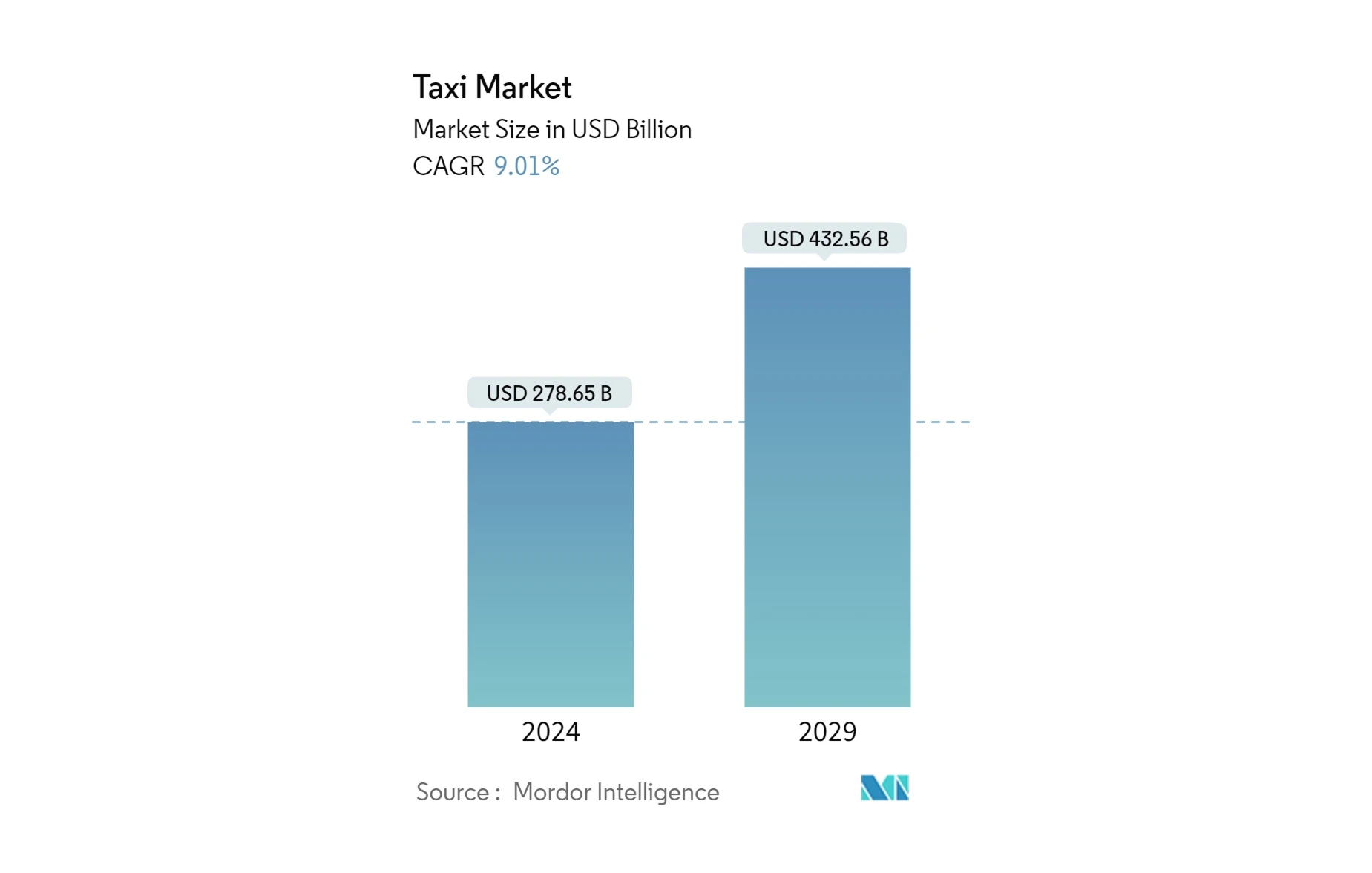
The Ride-Hailing Market
The global taxi market is experiencing significant growth, driven by technological advancements and evolving consumer preferences.
Source: Mordor Intelligence
User Interviews
To validate the platform's dual-market approach, I interviewed two current Tesla owners representing the eventual system users:
One focused on individual asset utilization (Private owner)
One focused on fleet-scale economic viability (Commercial operator)

Insights:
Users see the primary value in the system as the ability to transform an idle vehicle into a source of verifiable passive income.
The demand for full autonomy must be balanced with the ability for users to set automated and granular controls over operational times and locations.
Security and trust are paramount, requiring an effective emergency management system with instant, real-time alerts for accidents, vandalism, or breaches.
-Henry
Competitive Analysis
To identify market gaps and benchmark industry standards, I analyzed two key competitors representing the current mobility landscape:
Autonomous Specialists
Ride-Hailing Giants

Cruise
Pros
Deep financial backing from General Motors.
Direct integration with GM manufacturing capabilities.
Valuable data drawn from dense urban testing (SF).
Cons
Innovation pace tied to GM's slower corporate strategy.
Strictly a commercial fleet operation; not for personal use.
Severely restricted geographic availability.
No model for individual ownership or monetization.

Uber
Pros
Proven, fully integrated app infrastructure.
High brand recognition and market familiarity.
Massive, established global user base.
Cons
Lags behind competitors in autonomous deployment.
Dependent on external partnerships for AV technology.
No current path for autonomous private vehicle earnings.
History of significant labor and regulatory controversies.

Waymo
Pros
Decade of pioneering autonomous R&D.
Millions of miles of real-world testing data.
Backed by Alphabet’s immense resources.
Cons
No private ownership or income opportunities.
Tech-first approach may overlook user experience.
Zero-control model may alienate cautious users.
ighly limited service areas (test cities only).
Ideation
HMW Statement
User Flow
With all of the necessary features in mind, I created a comprehensive user flow that diagrams the streamlined path for owners to efficiently monitor, control, and optimize their autonomous vehicle assets.
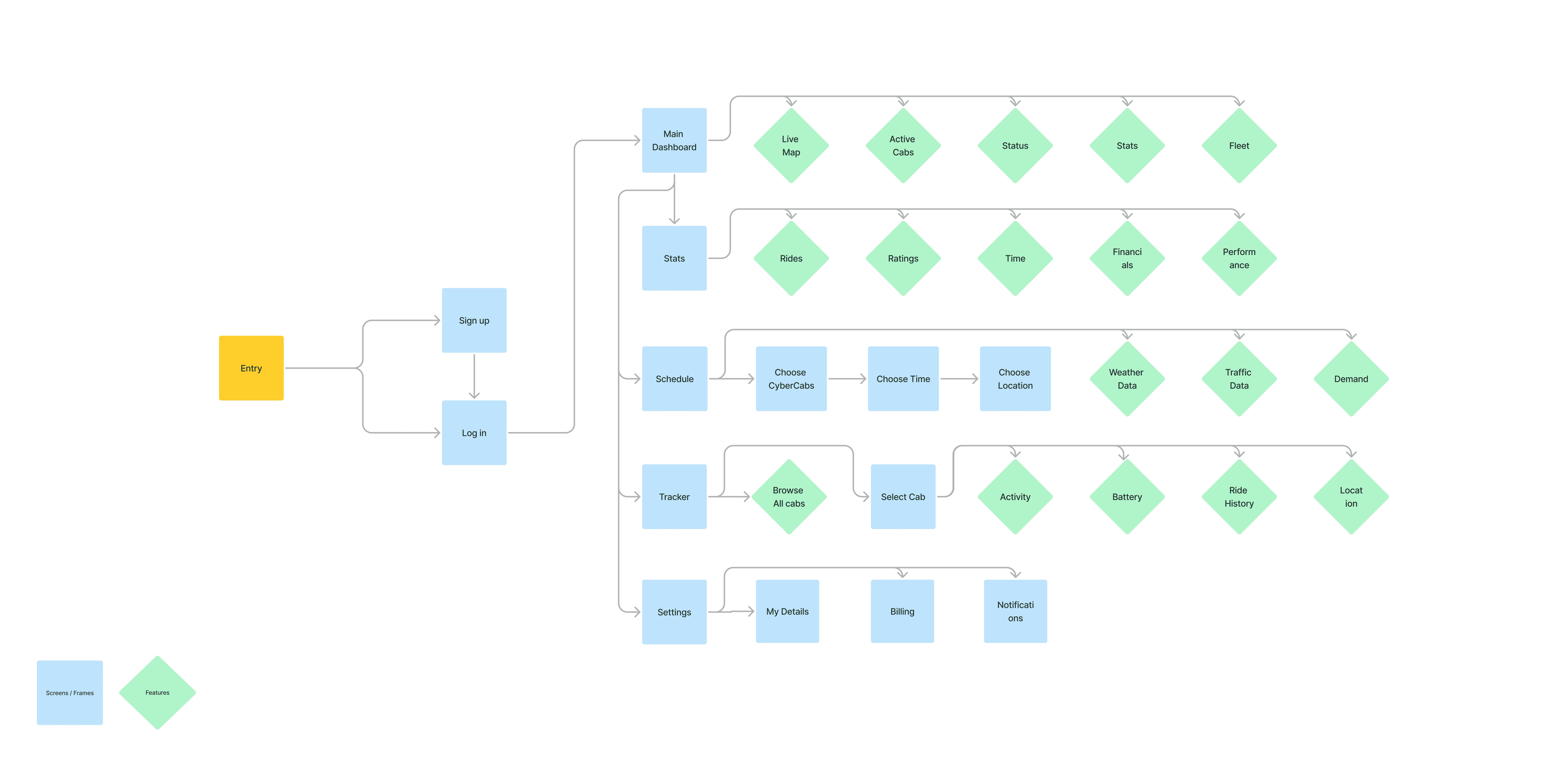
Features
Ideate and develop features that allow owners to monitor, control, and optimize their autonomous vehicle assets.
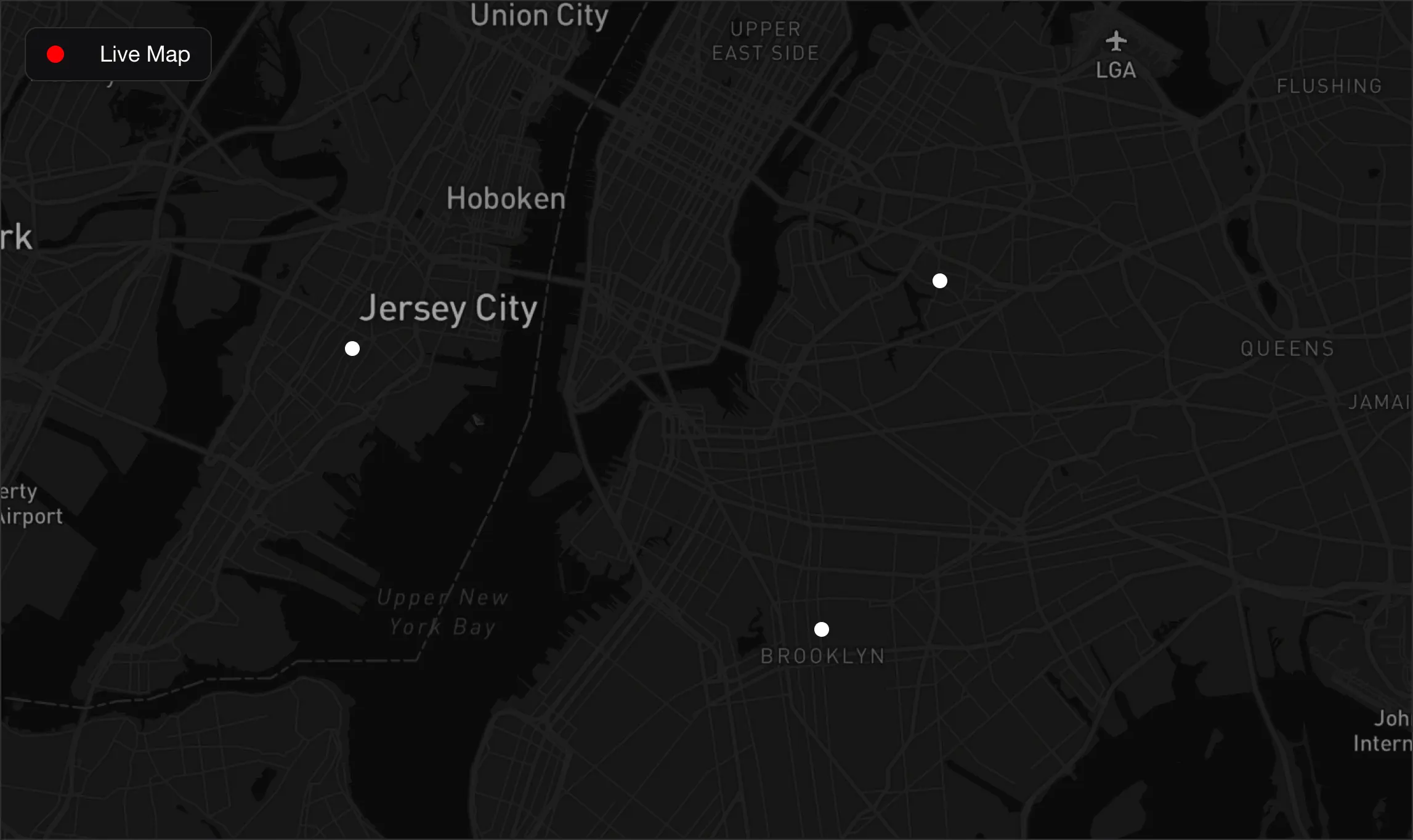
Live Map
Live Map provides real-time GPS tracking ensuring owners have instant visibility and peace of mind over their assets.
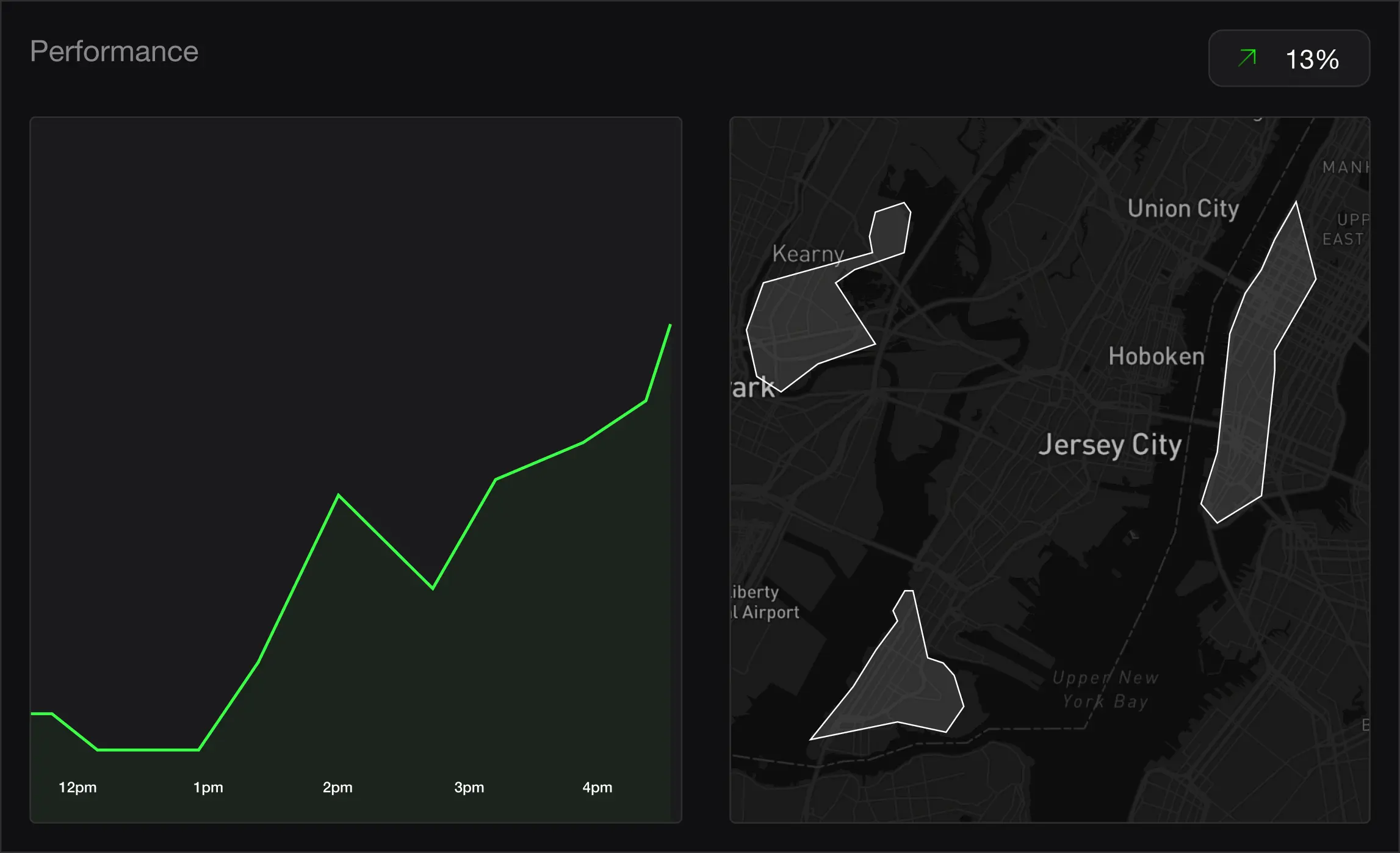
Analytics
Synthesize real-time data into clear visual analytics, enabling owners to easily monitor profits, ride volume, and operational efficiency.
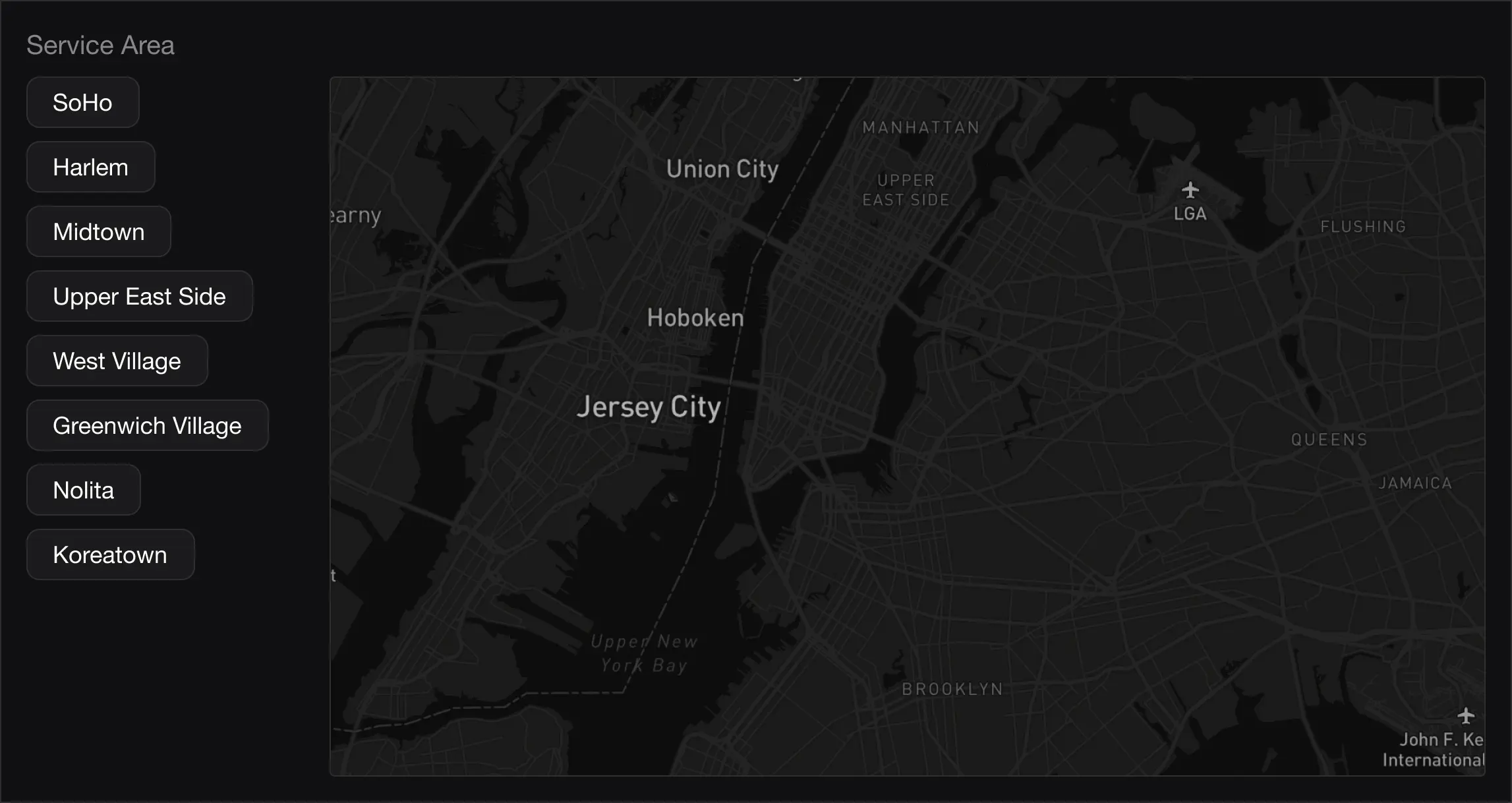
Operational Scheduling
The operational scheduling feature allows owners to define and activate specific geo-fenced service areas and time windows to optimize earning potential.